Smarter automation for floating wind foundations
The future of offshore energy is floating — and it demands new ways of building. From massive baseplates to intricate block welding, floating foundations require speed, precision and scalability in environments where traditional shipbuilding techniques fall short. At KRANENDONK, we bring automation that adapts to scale, complexity, and the ever-growing demand for offshore wind capacity.
Expert in Non-Repetitive Production
Modular Solutions that Scale with you
Readily from CAD to Production in minutes
The future of offshore energy is floating — and it demands new ways of building. From massive baseplates to intricate block welding, floating foundations require speed, precision and scalability in environments where traditional shipbuilding techniques fall short. At KRANENDONK, we bring automation that adapts to scale, complexity, and the ever-growing demand for offshore wind capacity.
Why floating wind needs smarter manufacturing
As floating wind projects grow in size and complexity, smart automation offers a way to build faster, safer, and more consistently — even with fewer skilled hands on deck.
Larger, more complex structures
Floating foundations can weigh from several thousand up to over 10,000 tons, with weld lengths stretching over several kilometers per unit. This demands robust welding platforms that can handle massive structures, design variability, and strict accuracy requirements — all without interupting production.
Production speed must increase
To meet global climate targets, industry forecasts project over 250 GW of floating wind capacity will be needed by 2050. That means deploying hundreds of floaters per year — only achievable by reducing cycle times, streamlining workflows, and minimizing downtime.
Labor gaps risk consistency
Skilled welders are in short supply worldwide. Automated welding reduces reliance on manual expertise, bringing consistent, high-quality welds even when labor markets tighten — while also improving safety and predictability.
Project diversity demands flexibility
Whether it’s a full-scale serial production line or a prototype floater with one-off designs, KRANENDONK systems adapt. Our modular platforms support varying workpieces, geometries and workflows — without rebuilding your factory around every new design.
Larger, more complex structures
Floating foundations can weigh from several thousand up to over 10,000 tons, with weld lengths stretching over several kilometers per unit. This demands robust welding platforms that can handle massive structures, design variability, and strict accuracy requirements — all without interupting production.
Production speed must increase
To meet global climate targets, industry forecasts project over 250 GW of floating wind capacity will be needed by 2050. That means deploying hundreds of floaters per year — only achievable by reducing cycle times, streamlining workflows, and minimizing downtime.
Labor gaps risk consistency
Skilled welders are in short supply worldwide. Automated welding reduces reliance on manual expertise, bringing consistent, high-quality welds even when labor markets tighten — while also improving safety and predictability.
Project diversity demands flexibility
Whether it’s a full-scale serial production line or a prototype floater with one-off designs, KRANENDONK systems adapt. Our modular platforms support varying workpieces, geometries and workflows — without rebuilding your factory around every new design.
Floating Wind begins on land
Floating wind turbines are being installed in deeper waters and further offshore. While the components are still built on land, the structures are getting larger, heavier, and more complex. This demands industrialized, high-precision fabrication.
KRANENDONK supports this shift with robotic welding, CAD-driven production workflows, and automated fabrication systems. We help yards scale up safely and consistently. From large steel sections to complex support structures, our automation delivers accuracy, repeatability, and shorter cycle times.
"Automated welding gives yards the precision and repeatability needed for today’s heavy offshore structures. What once required extensive manual work can now be executed safely, accurately, and with full process control."
Kevin Jongkind - Global Sales Manager at KRANENDONK
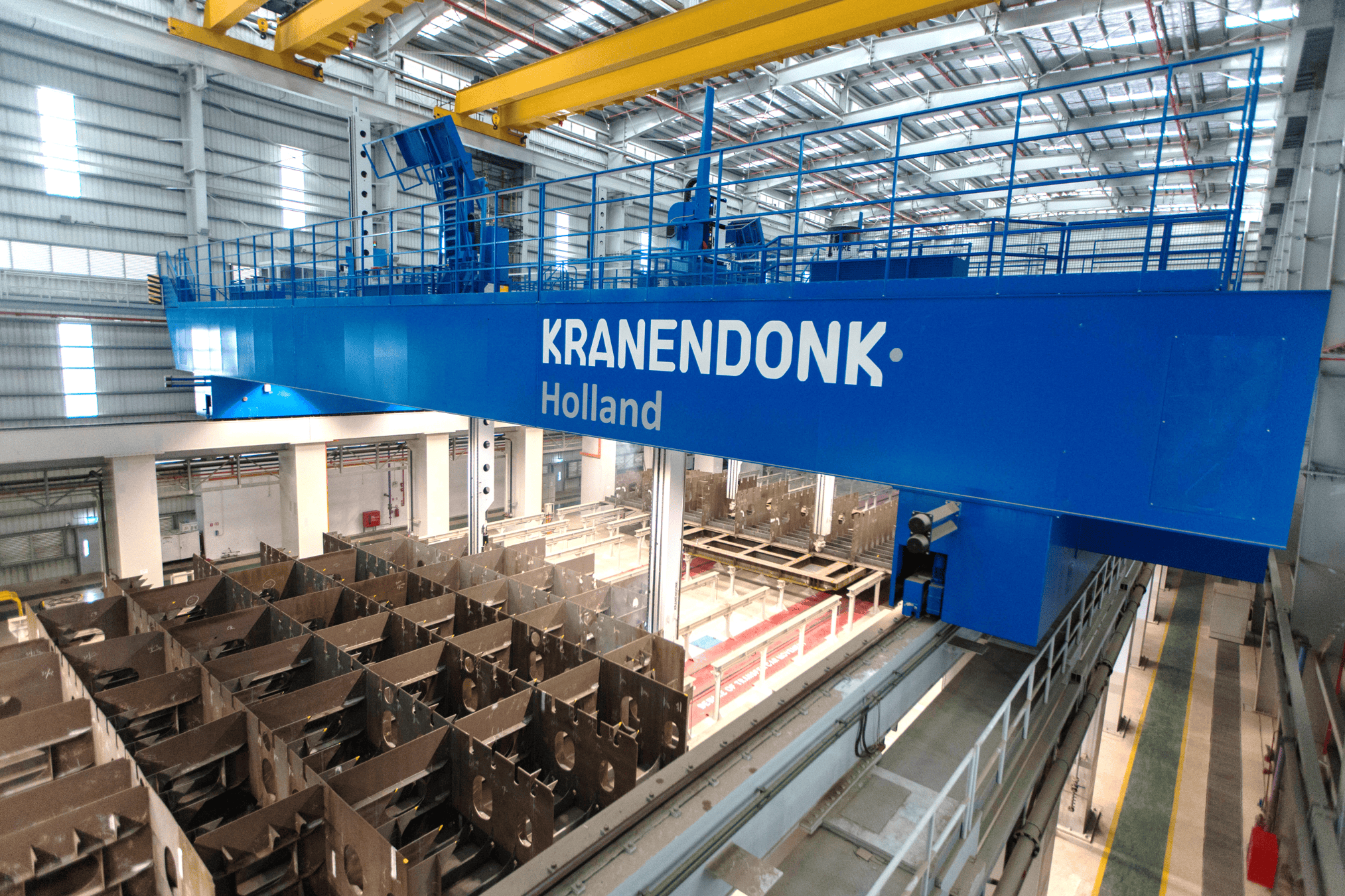
Block Welding Gantry
Where we add value in offshore fabrication
From baseplates to final blocks — offshore structures demand scale, precision, and control. Our automation systems support every step, helping you increase output and meet today’s production demands.
-
Baseplate welding
Join large plates into one -
Baseplate cutting, blasting & marking
Cut, blast, and mark welded plates -
Baseplate turning
Flip cut plates automatically — no crane needed -
Beam and profile cutting
Cut beams and profiles to size with precision -
Pipe cutting
Cut and bevel pipes with automated length control -
Stiffener welding
Weld stiffeners in position -
Block stiffener mounting
Assemble modules with robotic control -
Block welding
Final welds connect all parts into one solid structure
Where we add value in offshore fabrication
From baseplates to final blocks — offshore structures demand scale, precision, and control. Our automation systems support every step, helping you increase output and meet today’s production demands.
-
Baseplate welding
Join large plates into one -
Baseplate cutting, blasting & marking
Cut, blast, and mark welded plates -
Baseplate turning
Flip cut plates automatically — no crane needed -
Beam and profile cutting
Cut beams and profiles to size with precision -
Pipe cutting
Cut and bevel pipes with automated length control -
Stiffener welding
Weld stiffeners in position -
Block stiffener mounting
Assemble modules with robotic control -
Block welding
Final welds connect all parts into one solid structure
Recognized by offshore leaders
Leading offshore fabricators rely on our solutions to boost speed, quality, and reliability. Whether you’re working on monopiles, jackets, or floating foundations, we help you meet production targets and unlock new capacity.
Let’s rethink your floating wind workflow
Let’s explore what smarter automation could mean for your line — from reducing cycle times and welding hours to improving consistency and easing labor demands.
Whether you’re scaling up production or preparing for your first floater project, we’re here to help you build with confidence.
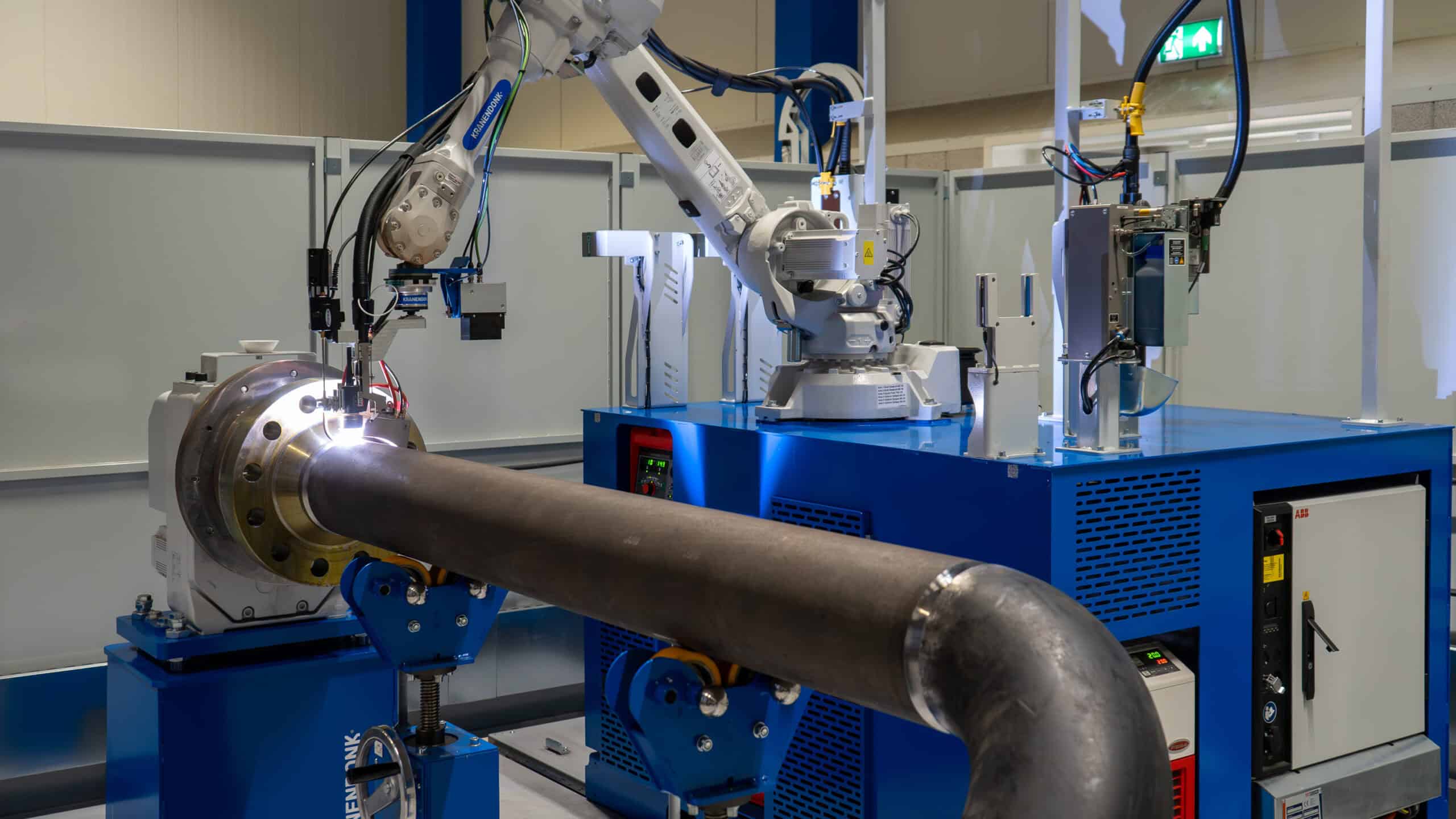
Robotic Pipe Shop
Let’s rethink your floating wind workflow
Let’s explore what smarter automation could mean for your line — from reducing cycle times and welding hours to improving consistency and easing labor demands.
Whether you’re scaling up production or preparing for your first floater project, we’re here to help you build with confidence.
Insights from our industry
Our blog covers what’s happening at KRANENDONK and beyond — from customer success stories and product innovations to trade shows, automation trends, and smart manufacturing tips.
Get inspired by how technology is transforming production, and stay up to date with our latest developments.
KRANENDONK strengthens collaboration with JGC through advanced Robotic Pipe Shop installation
KRANENDONK announces a strengthened collaboration with JGC Corporation through the implementation of a fully automated Robotic Pipe Shop, enabling high-quality and consistent pipe spool fabrication through advanced ZEROGAP beveling and...
Making a difference together this Christmas
Once again this year, KRANENDONK colleagues have come together to raise funds for the local food bank. What started several years ago as a small initiative has become a recurring...
Welding Automation & Innovation Days 2025
During the Welding Automation & Innovation Days 2025, KRANENDONK once again brought together customers, partners, and industry experts from across the world to experience the latest in welding automation.For two...